English
  العربية
  中文
中文
 Deutsch
 Türkçe

 日本語
日本語
Stadium vs. Parking Lot: How to Choose the Right Beam Angle for Outdoor Flood Lights
When it comes to outdoor lighting, a one-size-fits-all approach can lead to costly mistakes, safety risks, and performance shortcomings. A parking lot, for example, must feel safe and evenly lit to prevent accidents and deter undesirable activities. In contrast, a stadium demands intense, focused light to capture every exhilarating moment of fast-moving action. The solution lies in understanding one key specification—beam angle.
Beam angle, the degree to which light spreads from a fixture, is often overlooked in favor of wattage or lumens. While wattage tells you how much light is produced, the beam angle determines where the light goes. Choosing the right beam angle not only solves engineering challenges like poor uniformity and glare but also ensures that your lighting meets safety standards, reduces light pollution, and minimizes energy waste.
At HPWINNER, we specialize in precision optics for outdoor LED flood lights. We’re not just selling high-output fixtures; we’re providing customized lighting solutions tailored to your project’s exact needs. Let’s break down how to select the correct beam angle for your outdoor space—whether it’s a stadium, parking lot, or industrial yard.
Understanding NEMA Beam Classifications
First, let’s decode what "beam angle" really means in terms of outdoor flood lighting. The NEMA classification system is widely used to categorize beam angles into three groups:
Beam Angle Classifications
| NEMA Type | Beam Angle (Degrees) | Spread Characteristics | Ideal Application |
| Narrow (Type 2-3) | 10°–29° | Focused, long throw | Tall poles, high mast (e.g., stadiums, towers) |
| Medium (Type 4-5) | 30°–70° | Balanced spread | Mid-height poles, multipurpose areas |
| Wide (Type 6-7) | 70°–130°+ | Even, close illumination | Low poles, large areas (e.g., parking lots) |
Key Insight: Wattage and lumens influence how bright a light is, but to control where the light lands, you must factor in the beam angle. Choosing the wrong distribution leads to poor uniformity, over-illuminated hot spots, and gaps in coverage.
Scenario A: Lighting a Stadium (Precision & Punch)
The Challenge
Stadium lighting for sports or concerts requires vertical lux levels to ensure players, spectators, and cameras can see every detail. Given the height of high-mast poles—often 30m or taller—it’s critical to deliver light efficiently and precisely to the field without spilling excess light into the surrounding neighborhood.
The Solution: Narrow to Medium Beam Angles
For stadiums, narrow (Type 2) or medium (Type 3) beam angles in the range of 15° to 30° are ideal. These focused distributions ensure light is directed precisely onto the playing surface, with minimal scatter into the sky or surrounding areas. As a professional outdoor led flood lights manufacturer, we specialize in designing and producing high-performance luminaires that meet these precise beam control requirements for large-scale venues.
Why Precision Matters
Wide beams in a stadium setting can lead to:
Light Pollution: Excessive light scattered into the sky, disrupting visibility for everyone.
Dark Patches: Uneven lighting on the field, compromising safety and gameplay.
Instead, narrow beam fixtures “punch” light directly downward, creating intense illumination while maintaining superior uniformity across the field.
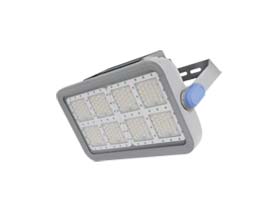
Recommended Solution: FL19A Series (Stadium Pro)
Key Feature: Equipped with precision optical lenses and optional laser sighting for pinpoint aiming.
Perfect For: High-mast installations requiring consistent, high-lux performance.
Action: View our FL19A Stadium Lights.
Scenario B: Parking Lot Lighting (Uniformity & Safety)
The Challenge
In a parking lot, the primary goal is safety and visibility. Shadowed areas or over-brightened hot spots can create uneven light and unsafe environments, undermining the purpose of the lighting. Poles in parking lots are generally shorter (6m–12m), requiring light to evenly blanket the ground.
The Solution: Wide Beam Angles (Type III or Type V)
For parking lots, wide beams in the range of 90° to 120° spread light evenly over the space. Wide-angle distributions ensure proper overlap between fixtures to prevent dark zones and shadow pockets, meeting IES standards for uniformity ratios, typically a Max:Min of 4:1 or lower.
Why Uniformity Matters
Safety: Uneven lighting can lead to accidents or make the parking lot feel unsafe for pedestrians.
Compliance: Many municipalities require lighting designs to meet predefined uniformity standards for safety audits.
Recommended Solution: FL37A
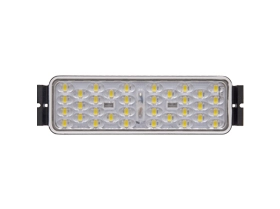
Key Feature: Modular lenses that create Type III (forward throw) or Type V (circular throw) patterns for varying pole configurations.
Perfect For: Parking lots, retail areas, and large open spaces.
Action: Explore FL37A Outdoor Floodlights.
The Goldilocks Zone: Industrial Yards & Harbors
Industrial yards, harbors, and similar facilities present a unique challenge: the poles are tall enough to require narrow beams, yet the ground coverage spans wide areas. A one-size beam simply won’t do.
The Solution: Mixed Optic Customization
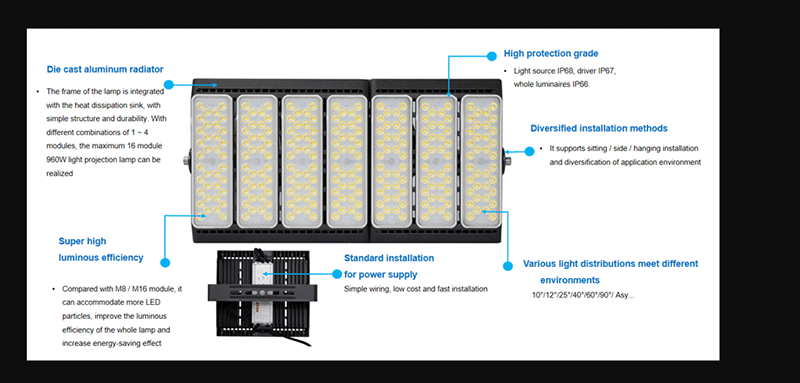
Here’s where HPWINNER's modular optics system shines. By using a mix of narrow beam lenses for long-distance coverage and wide beam lenses for close-up illumination, a single fixture can effectively handle both requirements. This tailored approach not only saves energy but also reduces the number of poles needed.
Why Partner Directly with Manufacturers Like HPWINNER
Most distributors or retailers carry standard beam angles (e.g., 90° wide beams). While these may suit general purposes, they often fall short for specialized projects like stadiums, industrial zones, or large parking lots.
Our Advantage
Customization On Demand: We design beam angles specific to your project’s pole height, spacing, and target zones.
Expert Consulting: HPWINNER provides Lighting Simulation Reports (DIALux) to model different distributions for your site. Don’t guess; our engineers calculate the ideal beam spread and uniformity.
Durability Tested: Unlike off-the-shelf solutions, our IP68-rated lenses resist yellowing and degradation, ensuring long-term precision.
Conclusion: Precision Lighting Done Right
The right beam angle can mean the difference between a safe, efficient outdoor space and a poorly lit liability. For stadiums, focus on precision with narrow to medium beams. For parking lots, wide beams ensure uniformity and safety. And for complex industrial applications, a customizable mix of optical technologies may be the perfect solution.
Related HPWINNER LED Lights Recommendations