English
  العربية
  中文
中文
 Deutsch
 Türkçe

 日本語
日本語
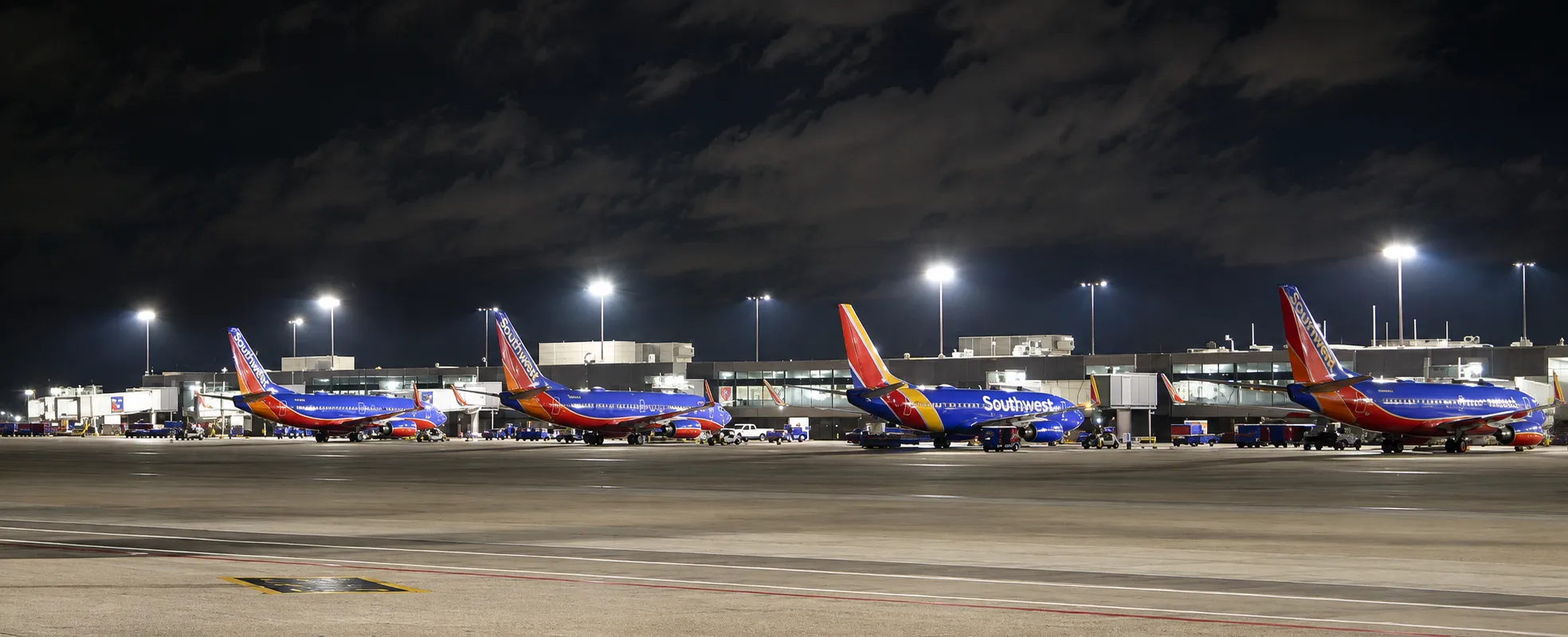
High-power LED floodlighting for airport aprons, ports, harbors, stadiums and sports facilities
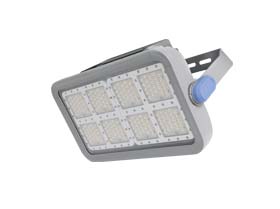
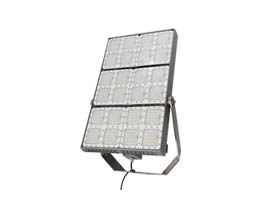
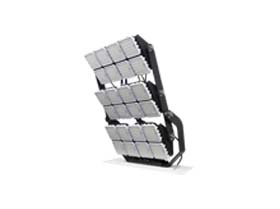
Applications of Outdoor LED Flood Lights in Airport, Harbor & Stadium Projects
Large-area floodlighting should be designed around the task taking place in the illuminated space—not around wattage alone. The same lumen output can produce very different results depending on pole position, mounting height, beam direction, obstructions and the visual target.
Airport apron operations: Lighting must allow pilots, marshallers and ground crews to identify aircraft outlines, markings, service vehicles, baggage equipment, personnel and potential obstacles. The design must reduce deep shadows beneath wings and fuselage while limiting direct glare toward cockpits, taxiing aircraft and the control environment.
Harbor and terminal operations: Lighting must support container identification, crane positioning, vehicle movement, loading and unloading, pedestrian safety and surveillance across areas with tall stacks and large machinery. Vertical visibility and shadow control are as important as horizontal ground illumination.
Stadium and sports operations: Lighting must allow players to track the ball, judges to make decisions, spectators to follow play and cameras to capture movement from multiple directions. Uniformity, vertical illuminance, glare, flicker and spill-light control must be matched to the level of play and broadcast requirements.
HPWINNER uses the project layout and operational requirements to simulate the lighting result before final product selection. The recommended luminaire, power, optical distribution and aiming configuration are therefore different for an apron stand, container yard and football stadium—even when all three use high-power LED floodlights.
LED Flood Light Design for Airport, Harbor & Stadium Projects
A professional floodlighting proposal begins with project inputs, not a product catalogue. HPWINNER reviews the site dimensions, operational zones, pole positions, mounting heights, installation constraints, required lighting level, uniformity target, glare limitations and environmental conditions.
The engineering team then builds a photometric model to identify insufficient coverage, excessive overlap, shadow zones, glare risks and unnecessary spill light. Product wattage, optical distribution and aiming angles are adjusted together rather than independently.
The final recommendation may include different floodlight models or optical configurations within the same project. For example, an airport apron may require wider distributions around aircraft stands and more controlled beams for distant service areas; a container terminal may combine long-throw optics with wider coverage between stacks; a stadium may require several aiming directions to achieve both horizontal and camera-facing vertical illumination.
The deliverable is not simply a lamp quotation. It is a project-specific configuration that can include recommended models, wattages, quantities, optical distributions, aiming angles, mounting notes and photometric simulation results.
-
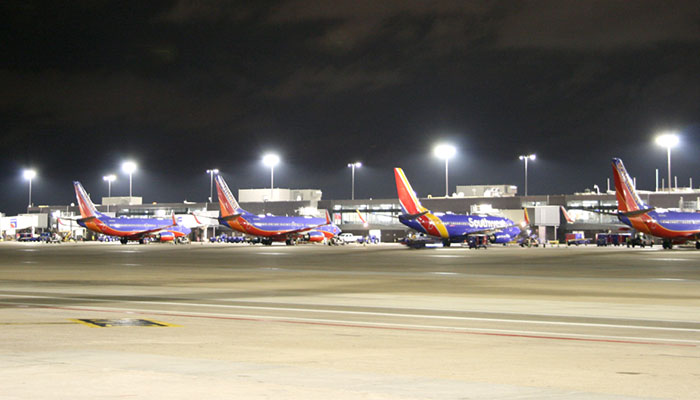
Airport Apron Lighting Solution
Airport apron floodlighting supports aircraft parking, boarding, baggage handling, refuelling, maintenance and other ground-service activities. Unlike ordinary area lighting, the visual task is not limited to illuminating the pavement. Ground personnel must identify aircraft contours, markings, equipment, vehicles and people around and beneath the aircraft.
Aircraft wings, fuselage and service equipment can create extensive shadow zones. A reliable design therefore considers lighting from more than one direction where the pole arrangement permits, improving visibility beneath the aircraft and reducing harsh contrast between brightly lit and obscured areas. At the same time, floodlights must be aimed to prevent direct glare toward approaching or taxiing pilots, apron controllers and ground crews.
HPWINNER evaluates aircraft-stand geometry, mast positions, mounting height, projected sightlines, horizontal and vertical lighting requirements and the risk of glare before determining wattage, optics and aiming angles. The goal is not maximum brightness, but controlled, uniform and operationally useful illumination.
FL18A Airport is the primary application-oriented option for apron projects. Its 100–500 W range, airport-apron-oriented distribution and CCT options, 360° stepped bracket adjustment, optional laser sight and tempered-glass construction support accurate aiming and maintenance in aircraft-service environments. FL46 can supplement projects requiring broader wattage selection or narrow-beam projection.
-
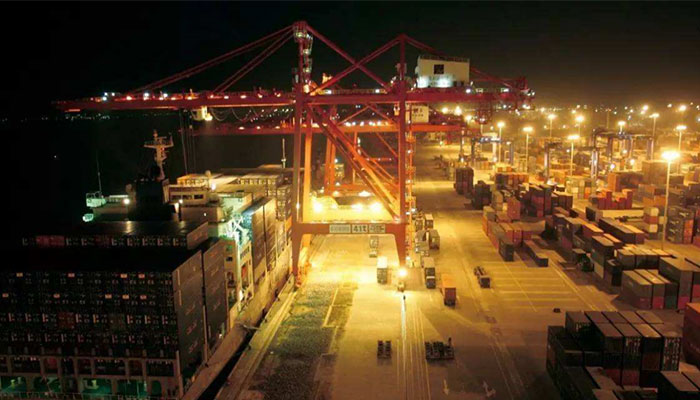
Harbor & Port Lighting Solution
Ports and container terminals combine large open yards with tall, constantly changing obstructions. Container stacks, gantry cranes, ship-to-shore cranes, trailers and handling equipment can block light and create moving shadow zones. A design based only on average horizontal illuminance may leave container faces, vehicle paths and operational interfaces poorly visible.
Floodlighting must support several tasks simultaneously: identifying container codes and equipment, positioning cranes, monitoring loading and unloading, separating vehicle and pedestrian routes, and maintaining visibility around berths and storage yards. This requires a combination of long-distance projection and wider distributions rather than one beam angle across the whole terminal.
The coastal environment adds a second layer of difficulty. Salt spray, humidity, strong wind, vibration, dust and long operating hours place sustained stress on housings, brackets, fasteners and electrical components. Because luminaires are often installed on high masts or crane structures, access time and replacement strategy also affect lifecycle cost.
HPWINNER evaluates terminal geometry, container-stack height, crane locations, traffic routes, mast positions, environmental exposure and maintenance access before recommending the configuration. FL46 supports 40–960 W configurations, 10° and 15° narrow beams for long-throw lighting, and optional anti-corrosion surface treatment for coastal or high-UV environments. FL2C can be used as the principal scalable high-mast platform where broad power coverage and modular maintenance are required.
-
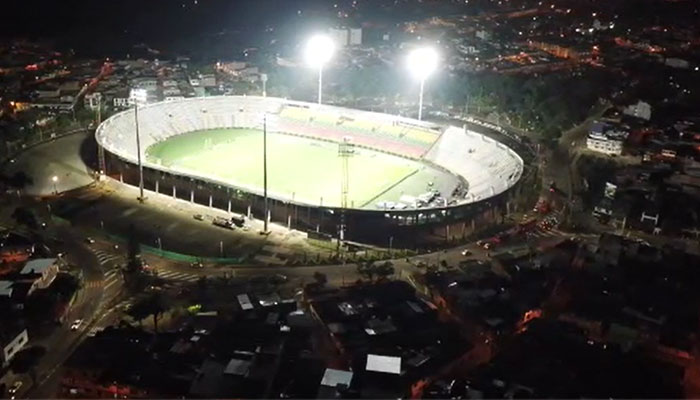
Football Field Lighting Solution
A football lighting system serves several viewing directions at the same time. Players need to track the ball on the ground and in the air; officials need to judge movement and contact; spectators view the pitch from surrounding stands; and broadcast cameras capture players and the ball from multiple horizontal and vertical angles.
For this reason, average horizontal illuminance alone is not sufficient. The design must also consider vertical illumination toward camera and spectator directions, uniformity across the playing surface, glare from high-mounted luminaires, flicker performance for slow-motion recording and unwanted spill light outside the venue.
Pole position and aiming strategy strongly influence the result. Concentrating excessive light from one direction may achieve an acceptable lux value while producing harsh modelling, visible shadows and poor camera-facing illumination. HPWINNER therefore uses the field dimensions, competition level, camera positions, pole layout and mounting height to determine the number of aiming directions, beam distributions and lumen packages.
FL19A is the principal stadium-focused option, providing up to 1500 W and 225,000 lm, 180° adjustment in both vertical and horizontal directions, and an optional laser sight for precise aiming. FL40A is suitable where modular power, independently adjustable module rows and optional light shields are needed to refine aiming and control spill light.
-
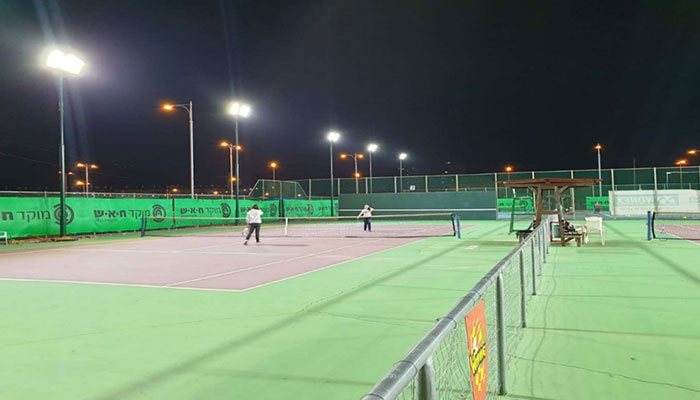
Tennis Court Lighting Solution
In tennis, players repeatedly look forward, sideways and upward while tracking a relatively small ball at high speed. Poorly positioned or excessively bright floodlights can enter the serving and receiving sightlines, causing discomfort or momentary loss of ball visibility.
The design must illuminate the baseline, service boxes, net area and side zones consistently while maintaining sufficient vertical visibility for elevated ball trajectories. Court-to-court spill and glare become especially important in multi-court installations where adjacent matches may operate simultaneously.
HPWINNER evaluates the number of courts, court orientation, pole setbacks, mounting height and player sightlines before choosing beam distributions and aiming points. Wider distributions may be used for near-court coverage, while controlled medium beams support the centre and opposite half without creating excessive light beyond the court boundary.
The final product selection should be based on the required playing level and site geometry rather than using a stadium wattage by default. FL46 or selected medium- to high-power area floodlights can be configured after photometric verification.
-
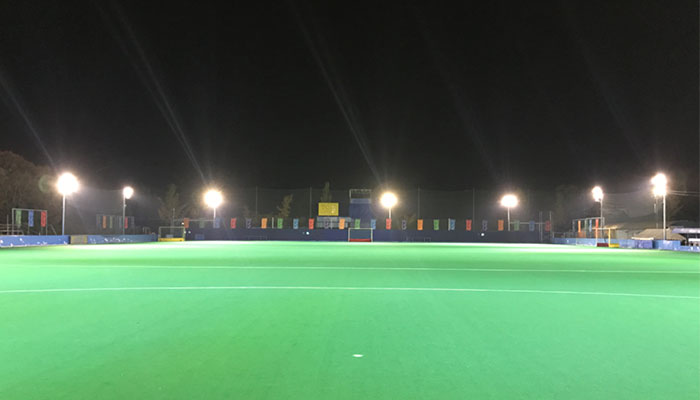
Hockey Court Light
Hockey places unusually high demands on visual reaction. Players and officials must track a small, fast-moving object while simultaneously monitoring other players and boundary lines. Any abrupt change in illumination or strong glare can delay visual recognition during rapid movement.
For ice hockey, the reflective ice surface can amplify luminaire brightness and visible glare. For field or court hockey, surface texture, line markings and ball contrast create a different visual task. The lighting design must therefore consider the specific playing surface rather than treating all hockey venues as identical.
Uniformity across the full playing area and low flicker are important for both live play and video capture. Floodlights should be aimed to reduce strong reflections and avoid excessive brightness within player sightlines, particularly near goals and sideboards.
HPWINNER determines the required lumen package, optical distribution and aiming arrangement from the venue type, surface, mounting structure and competition level. FL19A, FL40A or FL46 can be configured for larger venues after project simulation.
-
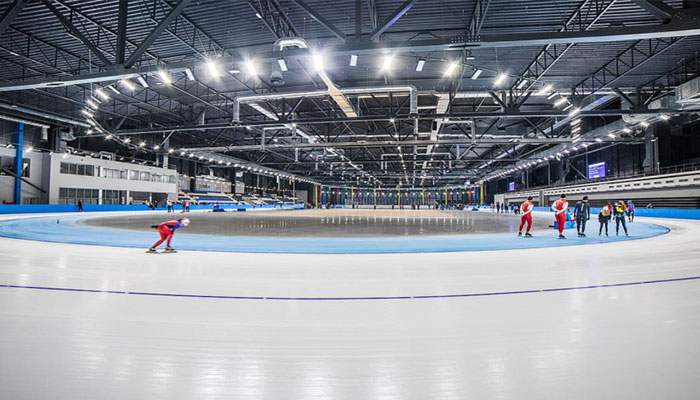
Gymnasium Lighting Solution
Gymnasiums and indoor sports halls often support several activities within the same space, including basketball, volleyball, badminton, training and public events. The lighting system must therefore deliver consistent visibility across different court markings, movement directions and operating modes.
High-mounted luminaires can produce direct glare when athletes look upward to follow a ball. Polished floors and light-coloured surfaces can also create reflected glare. The design should balance mounting height, beam spread and luminaire position to keep the playing area bright without placing excessive luminance in common sightlines.
Uniformity and flicker performance are particularly important for fast sports, video recording and slow-motion replay. The installation must also consider impact risk, maintenance access and whether the venue requires separate lighting levels for training, competition and non-sport events.
HPWINNER evaluates the hall dimensions, roof structure, court arrangement, mounting points and operating modes before recommending an appropriate sports-lighting configuration.
-
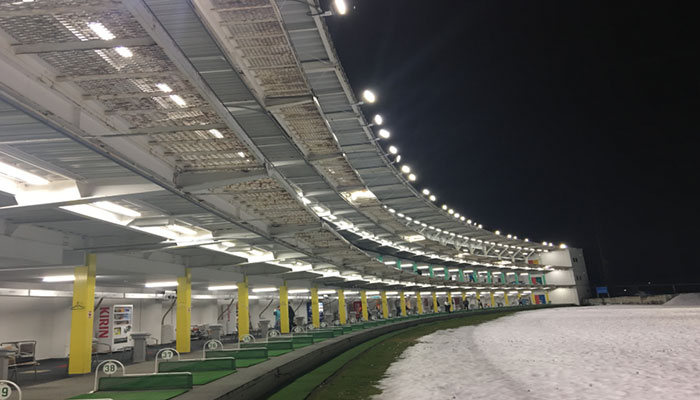
Golf Course Lighting Solution
Golf lighting is most commonly applied to driving ranges, practice areas, teeing zones, putting greens, parking areas and selected service zones. Lighting an entire golf course is a different and much more complex task, so the page should not imply that one floodlight arrangement is suitable for every course.
At a driving range, the primary visual task is following the initial ball flight and landing area over a long distance. Narrow and medium beams may be combined to illuminate different distance zones, while aiming must be carefully controlled to prevent excessive upward light and spill beyond the range boundary.
Pole placement must also consider players looking upward immediately after impact. Floodlights positioned directly in this sightline can make the ball difficult to track even when ground illuminance appears adequate.
HPWINNER uses the range length, width, target zones, pole positions and surrounding environment to determine the required projection distances, beam distributions and aiming angles. FL46, with 10° and 15° narrow-beam options, can support long-throw sections, while other distributions may be combined for nearer practice zones.
.webp "From Reactive Repairs to Proactive Protection: How AI-Powered Roadway Lights Respond to Voltage Abnormalities")