English
  العربية
  中文
中文
 Deutsch
 Türkçe

 日本語
日本語
How Long Do LED Street Lights Really Last? The Truth About Lifespan and Maintenance
LED street lights are often marketed as “20-year” products, but the reality is more nuanced. Most modern LED street lights are designed for ~50,000 to 100,000 hours—yet that number usually refers to lumen maintenance (how bright they remain), not whether the fixture will never fail. In municipal deployments, true longevity depends on engineering choices: thermal design, driver quality, ingress protection, surge immunity, and whether the fixture is repairable.
As a proven LED road light manufacturer, HPWINNER focuses on modular, serviceable road lighting designed to sustain performance in real environments—not just lab conditions.
The 100,000-Hour Promise vs. Reality (What “Lifespan” Really Means)
When you see “100,000 hours,” it rarely means the luminaire will work perfectly until hour 100,000 and then switch off. It usually means:
The LEDs will gradually dim over time
The light may still operate, but at lower brightness
The fixture’s driver or seals may fail before the LED chips do
That’s why professional buyers—municipal engineers, facility managers, and urban planners—should treat “lifespan” as an engineering outcome, not a marketing claim.
Where HPWINNER fits: HPWINNER is a LED road light manufacturer that designs for predictable lumen maintenance and easier repair through patented modular architecture and verification testing (including a CNAS-accredited lab).
Understanding the “L70” Standard: The Metric of Expertise
What does L70 mean?
L70 is a widely used lumen maintenance threshold. It indicates the point at which the LED system is expected to produce 70% of its original light output.
What does “L70 B10” mean?
L70 B10 adds a reliability layer:
L70: 70% lumen maintenance threshold
B10: only 10% of units are expected to fall below that threshold by the rated time
In other words, 90% of fixtures are expected to still deliver at least 70% output
For procurement teams, L70 B10 tells a more realistic story than “it turns on.”
Why lumens-per-watt isn’t just an efficiency number
Many spec sheets focus on efficacy (lm/W). But efficacy also hints at system health:
Better optical and thermal engineering typically supports higher efficiency and stability
HPWINNER fixtures can be configured with high-efficacy systems (e.g., up to ~200 lm/W depending on model and configuration), which supports strong lumen maintenance over time
The 3 Silent Killers of Street Light Lifespan
1) Heat Dissipation (Thermal Management)
Heat is the quiet, constant degrader of LED life. Poor thermal pathways cause higher junction temperatures, which accelerates:
lumen depreciation
color shift
premature component aging
Engineering signal to look for: robust heat-sink geometry, quality die-cast materials, and evidence of thermal testing.
E-E-A-T highlight: HPWINNER’s heat dissipation designs emphasize stable performance under demanding duty cycles—one of the most important factors in long-term lumen maintenance.
2) The Driver Factor (The LED Often Outlives the Electronics)
In real-world municipal operations, drivers fail more often than LED chips. Driver longevity depends on:
component grade (capacitors, MOSFETs, PCB)
operating temperature
surge and transient protection
For roadway grids, surge events are common. Look for fixtures designed with 10kV/20kV surge protection options to reduce early-life failures and unplanned truck rolls.
3) Environmental Ingress (Water + Dust = Shortened Life)
Ingress protection (IP) is not a checklist item—it’s a service-life multiplier.
IP65/IP66: strong protection against dust and water jets
IP68: designed for more severe water ingress resistance (when properly engineered and validated)
Why it matters: moisture intrusion can corrode connectors, compromise drivers, and fog optics—raising maintenance cost long before LEDs reach L70.
HPWINNER advantage: HPWINNER’s modular approach includes IP68 module-level protection, which helps isolate failures and improves resilience in coastal, monsoon, and high-humidity regions.
The “HPWINNER Advantage”: Modular Design for Practical (Near-Continuous) Service Life
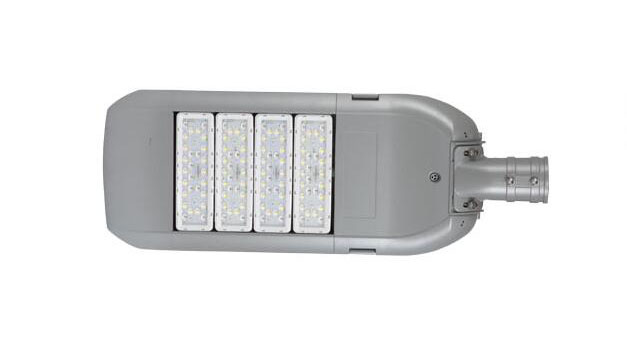
Traditional luminaires are often treated as disposable: when a key component fails, the whole fixture gets replaced. A modular LED road light manufacturer takes a different approach—designing fixtures to be repairable at the component level.
Tool-free maintenance: replace only what fails
With modular architecture, maintenance teams can typically service:
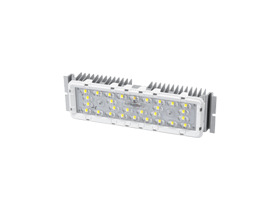
LED module(s)
driver module
surge protection components (depending on design)
…without replacing the full luminaire housing, optics, and mounting hardware.
Sustainability: “repairable infrastructure” reduces e-waste
For sustainability officers and public procurement teams, modular lighting supports:
fewer full fixture replacements
less landfill waste
better lifecycle carbon outcomes
smoother budget planning (capex vs opex)
It’s also aligned with “smart city ready” planning, where keeping the physical platform stable matters as controls and sensors evolve.
Total Cost of Ownership (TCO): Where Longevity Pays Off
Lifespan is only meaningful when translated into maintenance cost and service interruptions.
The math (simple 10-year comparison)
Over 10 years, roadway operators commonly compare:
HPS (High-Pressure Sodium): frequent lamp changes, ballast/ignitor issues, higher energy use
LED street lights: lower energy use, fewer relamps, but driver failures and ingress issues can drive hidden costs if the product is not well engineered
A modular LED approach typically lowers TCO by reducing:
labor time per repair (faster service)
inventory complexity (replace modules, not full fixtures)
disruption cost (shorter outages)
Real-world durability is the true manufacturer test
A reliable LED road light manufacturer proves durability not only in datasheets but in harsh climates:
extreme heat (e.g., desert environments like Dubai)
freeze-thaw cycles in Nordic regions
coastal corrosion zones
heavy rain + humidity + pollution
Experience factor (case-study style paragraph): In long-term municipal-style deployments, HPWINNER’s modular fixtures are built to maintain stable output over years of operation by reducing heat stress, protecting against ingress, and enabling targeted repairs—helping keep lumen maintenance high while controlling street light maintenance cost.
Conclusion: Choose Longevity Over Low Price
LED street light life is not “luck.” It’s the result of:
thermal engineering
high-quality driver design + surge protection
robust ingress protection (IP rating integrity)
modular serviceability that prevents full replacements
If you’re evaluating vendors, don’t just compare price per unit—compare maintenance strategy, rated lumen maintenance (L70/B values), ingress protection, and repairability.
FAQ
How often do LED street lights need maintenance?
In well-engineered systems, maintenance is often infrequent compared with HPS. However, real schedules depend on driver quality, surge exposure, climate, and whether the luminaire is modular (module swaps reduce downtime).
What is the difference between IP66 and IP68 in street lighting?
IP66 typically protects against dust and powerful water jets. IP68 is designed for more severe water ingress resistance under specified conditions. For roadway lighting, the practical impact is better resistance to moisture-related failures—especially in flood-prone, coastal, or high-humidity environments.
Related HPWINNER LED Lights Recommendations