English
  العربية
  中文
中文
 Deutsch
 Türkçe

 日本語
日本語
Lighting the Global Stage: What Defines a Professional Stadium Lighting System
The FIFA World Cup turns a stadium into a global stage. This scale means stadium lighting is no longer just about making the pitch visible. It must support players, referees, spectators, broadcasters, slow-motion replay systems, commercial events and the surrounding urban environment at the same time.
When a single match is watched by audiences at this scale, lighting performance is no longer judged by whether the human eye feels the field is “bright enough”. It is judged by whether cameras can consistently capture players’ faces, ball movement, turf texture and high-speed action with clarity.
1. Stadium lighting is not simply about brightness. It is about illuminance, uniformity and broadcast performance.
Illuminance is measured in lux, and 1 lux equals 1 lumen per square metre. However, for a professional stadium, lux alone does not tell the full story.
Horizontal illuminance, or Eh, determines the basic visibility of the playing surface. Vertical illuminance, or Ev, determines how clearly players, faces and the ball appear on camera. FIFA also notes that achieving the required vertical illuminance, modelling effect and uniformity usually requires luminaires to be mounted at greater heights and aimed with appropriate projection angles.
The UEFA Stadium Lighting Guide 2023 classifies football stadium lighting into five levels. At the highest category, Elite Level A, the average horizontal illuminance must exceed 2,000 lux, with horizontal uniformity U1h above 0.50 and U2h above 0.70. For vertical illuminance, the average Ev must exceed 1,500 lux in all four reference directions — 0°, 90°, 180° and 270° — while the minimum Ev must exceed 1,000 lux in each direction.
These requirements show that top-level stadium lighting is not a one-directional lighting task. It is a multi-camera, multi-angle visual system designed for professional sports broadcasting.
2. Broadcast-class stadium lighting must serve both the live audience and the camera.
According to UEFA requirements, Level A lighting requires Eh above 1,500 lux, average Ev above 1,250 lux in all four reference directions, and minimum Ev above 700 lux. Level B requires Eh above 1,400 lux, average Ev above 1,000 lux and minimum Ev above 600 lux. Level C requires Eh above 1,200 lux, average Ev above 700 lux and minimum Ev above 350 lux.
The logic behind these figures is clear: the higher the competition level, the more the broadcast image depends on stable, uniform and predictable vertical lighting.
Uniformity is equally critical. UEFA evaluates horizontal illuminance uniformity using 96 reference points across the playing area. Vertical illuminance is also assessed across multiple reference planes. Poor uniformity can lead to over-bright zones, dark sidelines, visible shadowing near the penalty area and inconsistent camera exposure. For broadcasters, this directly affects image continuity and viewing quality.
3. Slow-motion replay makes flicker control a hard performance requirement.
Modern football broadcasting depends heavily on high-speed cameras and slow-motion replay. UEFA states that flicker can interfere with slow-motion images and negatively affect the viewing experience.
For Elite Level A, the average and maximum flicker factor must both be below 3%. UEFA further notes that, under most sports television technical conditions, a flicker factor below 3% is generally sufficient to avoid visible flicker in slow-motion replay at up to approximately 300 frames per second.
This is one of the reasons why high-end stadium lighting is moving from traditional HID systems to LED systems. LED lighting offers better dimming capability, more precise control and stronger potential for flicker management through advanced driver design. It also enables dynamic lighting scenes for pre-match ceremonies, goals, half-time shows, concerts and other stadium events.
4. Colour temperature, colour rendering, glare control and maintenance factor determine long-term performance.
A top-level football stadium is not simply designed to be as bright or as white as possible. UEFA Elite Level A requires a correlated colour temperature between 5,000K and 6,200K, a colour rendering index Ra of at least 80, and a glare rating RG below 50.
These metrics directly influence image colour accuracy, visual comfort for players, spectator experience and camera white-balance stability.
Maintenance factor is another key parameter. In UEFA Elite Level A, the maintenance factor is 0.90 for LED lighting and 0.80 for HID lighting. This means the lighting design must account for lumen depreciation, pollution, cleaning cycles and long-term illuminance reduction. A professional lighting design is not based only on initial test results. It must remain compliant after years of operation.
In non-match conditions, the lighting system does not need to operate at full output. UEFA’s maintenance mode requires an average horizontal illuminance of 250 lux. This is why modern stadium lighting systems are usually designed with multiple operating modes, including match mode, training mode, maintenance mode, emergency mode and entertainment mode. These modes help reduce energy consumption and extend system lifetime.
Professional Stadium Lighting Is Now a Performance Infrastructure
For world-class sports venues, lighting is no longer a supporting facility. It has become part of the stadium’s core performance infrastructure.
A well-designed stadium lighting system must deliver sufficient illuminance, strong vertical visibility, high uniformity, low flicker, accurate colour rendering, controlled glare and responsible spill-light management. These requirements directly affect player performance, referee judgment, spectator comfort, broadcast quality and the venue’s long-term operating efficiency.
As global sporting events continue to raise the standards for live viewing and televised coverage, stadium lighting is moving from simple illumination toward a more precise, intelligent and sustainable system. The future of professional stadium lighting will be defined not only by how brightly a venue is lit, but by how accurately, efficiently and responsibly light is delivered.
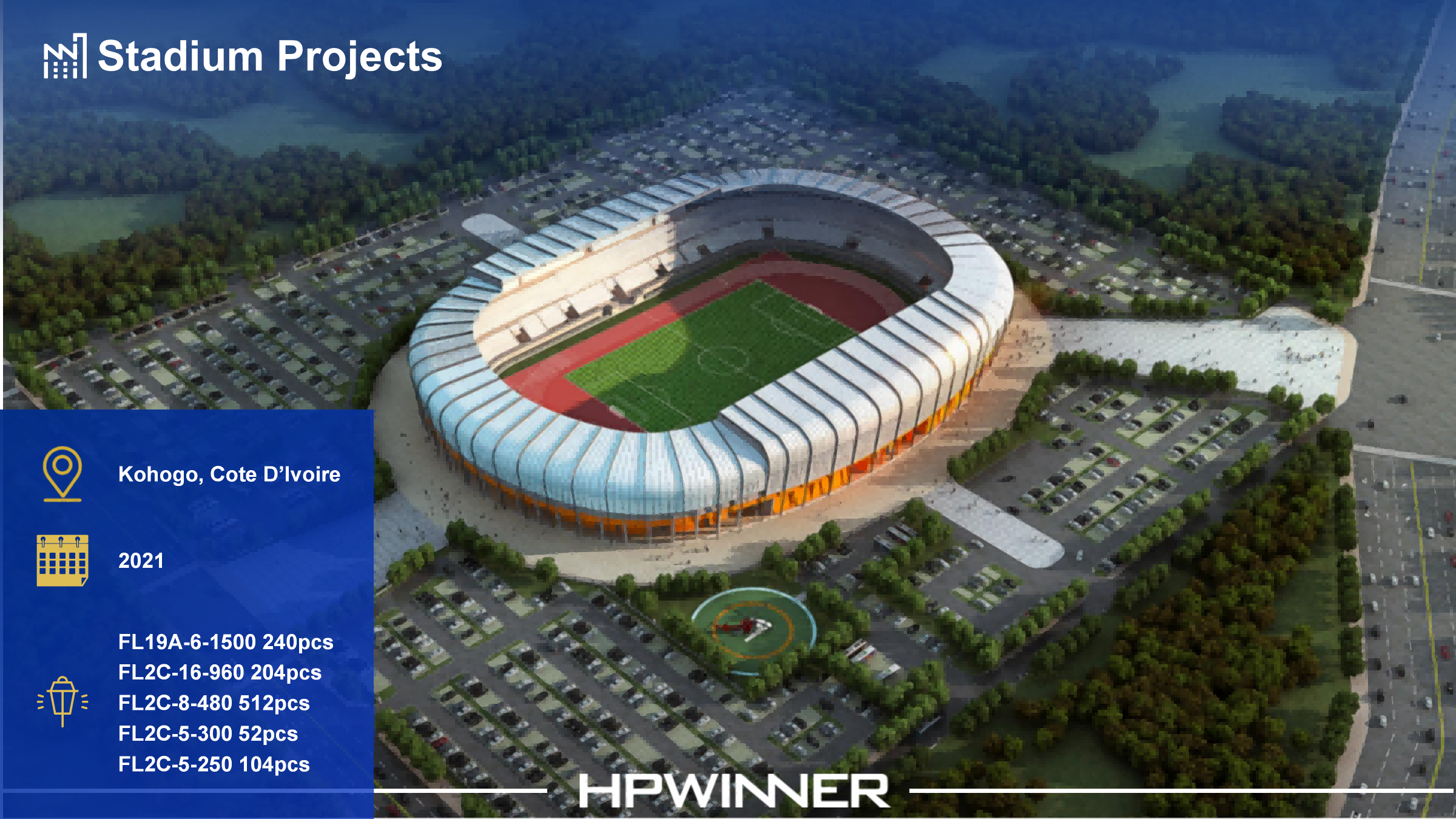
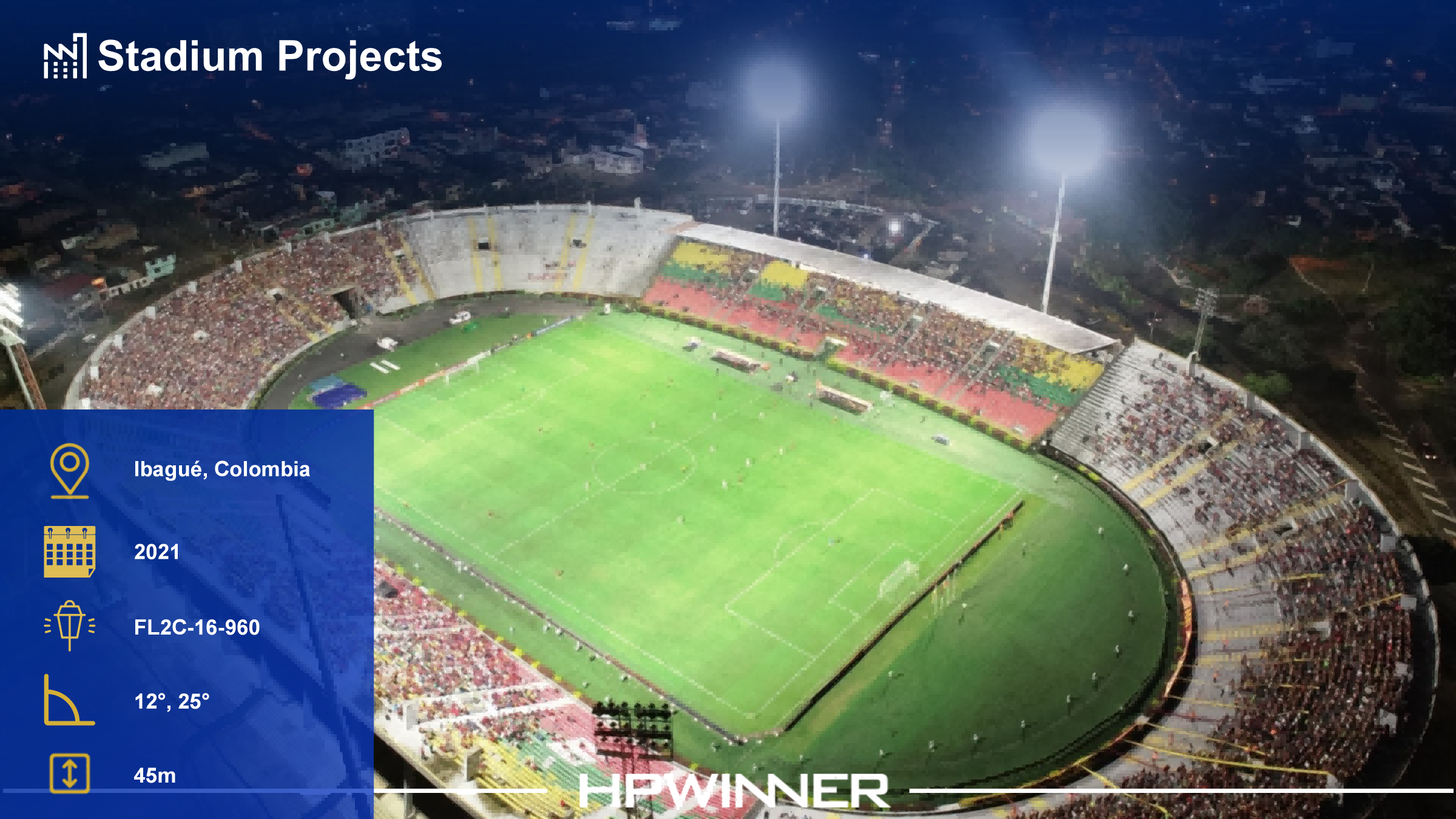
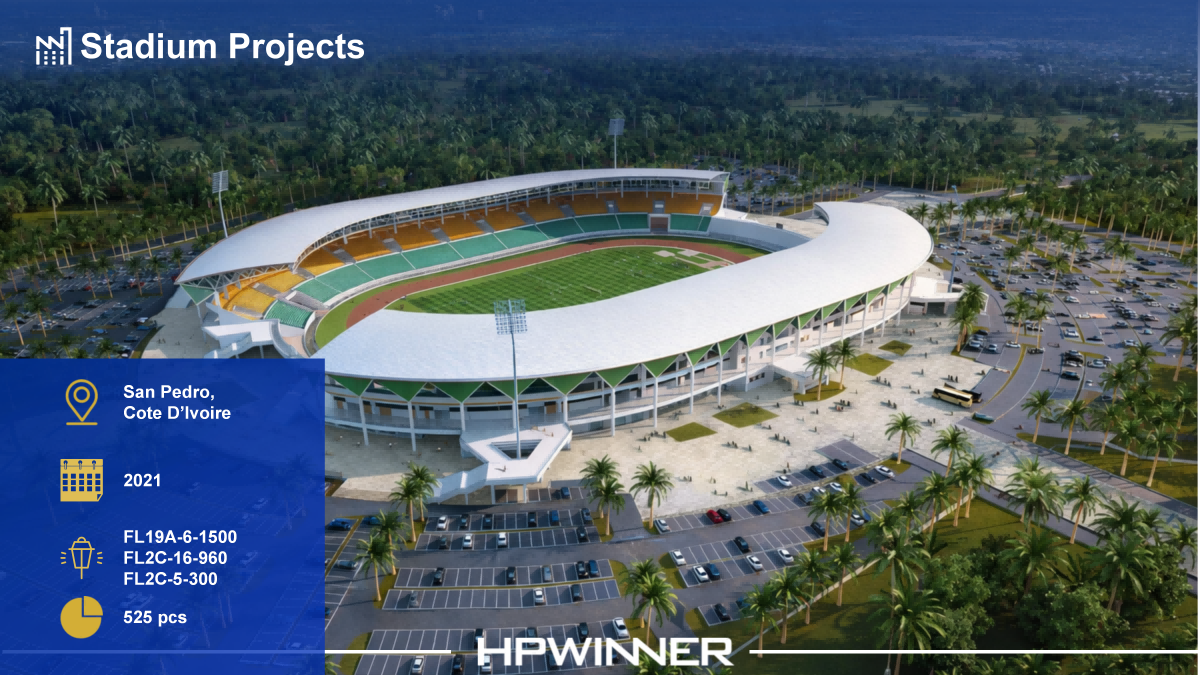
HPWINNER'S Stadium Lighting Cases
Related HPWINNER LED Lights Recommendations